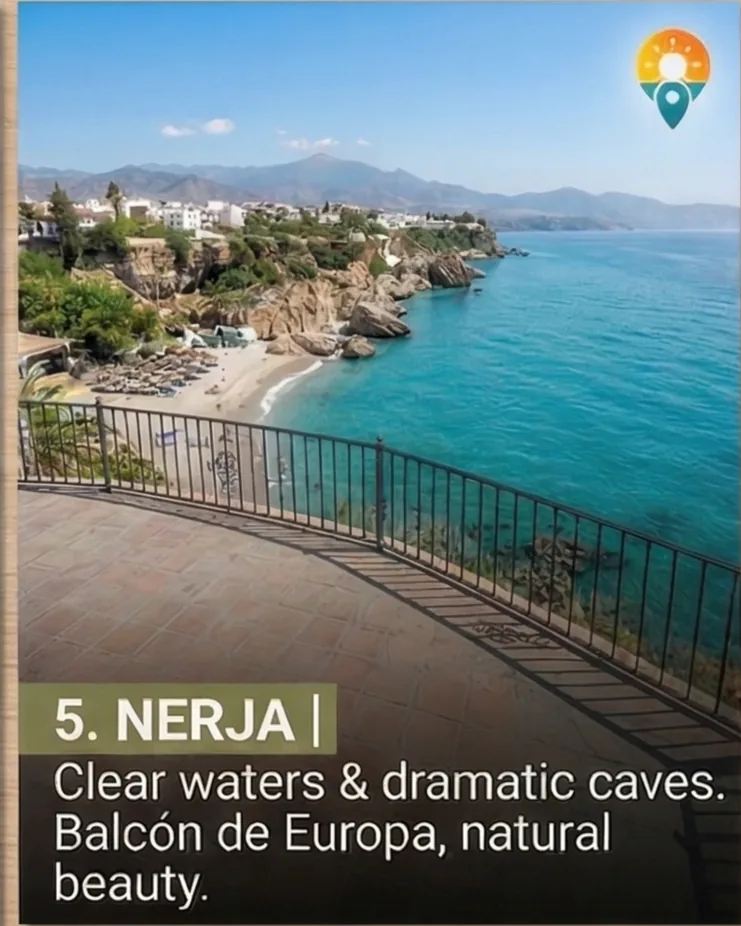
Nerja sits at the far eastern end of the Costa del Sol — far enough from Málaga's airport bustle to feel genuinely relaxed, close enough to be easily accessible. What makes Nerja special is its combination of ingredients that rarely come together so perfectly: a dramatic clifftop promenade overlooking the sea, some of the clearest beaches on the entire coast, a prehistoric cave system that belongs on every visitor's list, and one of Andalucía's most beautiful white villages just 7km up the mountain.
If you're trying to decide where on the Costa del Sol gives you the most authentic experience without sacrificing comfort, Nerja is hard to beat.
Top Things to Do in Nerja
1. The Balcón de Europa
The Balcón de Europa is Nerja's defining landmark — a broad clifftop promenade that juts out over the Mediterranean like the prow of a ship. King Alfonso XII visited in 1885 after a devastating earthquake and, standing here surveying the sea, declared it "the balcony of Europe." The name stuck.
Today it's the social heart of town: street performers, couples watching the sunset, families eating ice cream, and a sweeping view of coves on either side. From here you can see the beaches of Calahonda to the west and Carabeillo to the east. On exceptionally clear days, the Rif Mountains of Morocco are visible across the Strait.
2. Nerja Caves (Cuevas de Nerja)
Four kilometres east of town, the Nerja Caves were discovered in 1959 by a group of local boys who stumbled upon an entrance hidden beneath a fig tree. What they found was one of the most remarkable cave systems in Europe — a cathedral-like sequence of chambers stretching hundreds of metres into the mountain, dripping with stalactites and stalagmites that took hundreds of thousands of years to form.
In 2012, researchers identified cave paintings of seals near the entrance that are estimated to be over 42,000 years old — older than any other known cave art in the world, pre-dating Neanderthal extinction. The Hall of the Cataclysm alone, with its 32-metre column (the tallest in any accessible cave in the world), justifies the entire visit.
- Opening hours: Daily 9:30am–7:30pm (summer); 9:30am–4:30pm (winter)
- Tickets: Adults €12.50, children under 6 free. Book online to guarantee entry in summer
- Visit duration: Allow 45–75 minutes for the tourist route
- Temperature inside: 18°C year-round — bring a light layer in summer
Explore Nerja with an AI Guide in Your Pocket
SolGuide triggers audio commentary as you approach the caves, beaches and Balcón de Europa — full historical context, skip-the-queue tips, and restaurant picks based on where you're standing.
Get SolGuide Free →iOS & Android · First month free · No credit card
3. Beaches in Nerja
Nerja's beaches are among the best on the Costa del Sol — helped considerably by the eastern location, which means cleaner water, fewer hotels right on the sand, and a more natural setting. The key beaches from west to east:
Playa Burriana
The largest and most popular beach in Nerja, 1km east of the Balcón. Wide, sandy, with excellent chiringuitos including the famous Ayo's — run by the same family for 50 years, serving paella cooked in enormous pans over open wood fires. The snorkelling around the rocks at both ends is genuinely excellent. Sun loungers and parasols available from €6/day.
Playa Maro
A stunning small cove 4km east of Nerja, set beneath dramatic white cliffs in the Maro-Cerro Gordo nature reserve. The water is the clearest on this stretch of coast — visibly turquoise on satellite maps — and the setting feels almost tropical. The descent from the car park is steep (10-minute walk); there are no facilities. Bring water and snacks. Nudist section at the eastern end.
- Playa Calahonda — Small cove directly below the Balcón de Europa. Shade from the cliffs and excellent for a morning dip without the crowds of Burriana.
- Playa Carabeillo — The other cove beneath the Balcón, equally small and sheltered. Slightly rocky entry but clear water.
- Playa Torrecilla — Long sandy beach west of the centre, calmer sea, popular with families.
4. Day Trip to Frigiliana
Just 7km uphill from Nerja, Frigiliana is one of the most beautiful white villages in all of Andalucía and one of the least touristy considering how spectacular it is. The upper village (Barribarto) is a steep maze of lanes so narrow that some sections require single-file walking, with flower pots overflowing on every wall and views across the foothills to the sea.
The village is famous for its honey (miel de Frigiliana), hand-painted ceramic tiles depicting the history of the Reconquista, and artisan shops selling locally produced olive oil and wine. Allow 2–3 hours to explore properly. The local restaurant El Ingles has a terrace with outstanding valley views.
5. Coastal Walk: Nerja to Maro
One of the finest short walks on the Costa del Sol — a 4km coastal path from Nerja's Playa de la Torrecilla heading east along the clifftops to Maro village and its beach. The route passes through the Maro-Cerro Gordo nature reserve, offering dramatic sea views, wildflower meadows in spring, and several hidden coves accessible by steep paths. Allow 2–3 hours return.
Concerts & Events in Nerja
Nerja has a busy calendar of live concerts and events throughout the year — open-air summer concert seasons, Ticketmaster shows, and one-off festivals across the Costa del Sol. If a night out to live music is part of your trip, it's worth checking what's on before you book your dates.
See upcoming concerts and events in Nerja →
Where to Eat in Nerja
Nerja has a genuinely good food scene that punches well above its size, driven by local fishing boats, fertile farmland in the Frigiliana valley, and a tradition of family-run restaurants that haven't needed to adapt to tourist expectations because locals fill them regardless.
Best Chiringuitos (Beach Restaurants)
Ayo's on Playa Burriana is the most famous — arrive before 1pm to get a table for the lunchtime paella session. The paella is cooked in a giant pan over wood fire and served communally. It's messy, loud, and completely wonderful. Expect to pay €12–15 per person for a generous portion.
For a quieter beach lunch, El Chiringuito de Burriana at the western end of the same beach does excellent grilled fish and cold beer with feet in the sand.
Best Tapas
The streets just behind the Balcón de Europa — particularly Calle Pintada and Calle Cristo — are lined with traditional tapas bars that do excellent gambas pil-pil (prawns in chilli oil), berenjenas con miel (fried aubergine with cane honey) and cold local wine. Budget €15–20 per person for a full tapas crawl.
Getting to and Around Nerja
- From Málaga airport: Take the Cercanías train to Málaga city centre (12 minutes), then the Alsa bus to Nerja (1 hour, €5–7). Total journey about 1.5 hours. Or hire a car directly from the airport — strongly recommended if you plan to visit Frigiliana, Maro or other inland villages.
- From Marbella: About 1 hour 20 minutes by car along the A-7 coastal road (no toll). Bus takes about 2.5 hours with a Málaga connection.
- Within Nerja: Almost everything is walkable. The town is compact enough to cover the main areas on foot in a day. Taxis are available from the main stand on Plaza Cantarero for Frigiliana and the caves.