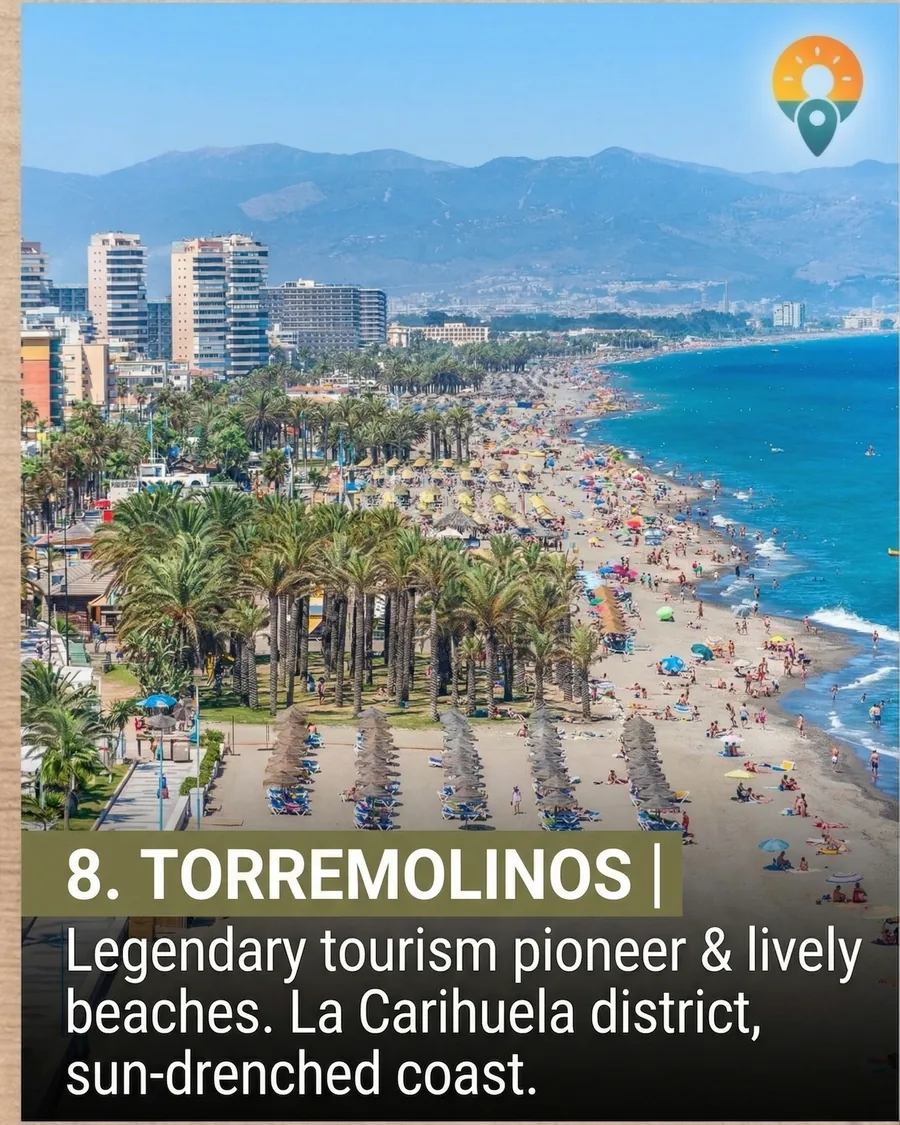
The Costa del Sol stretches 150 kilometres from Málaga to Gibraltar, and most visitors see perhaps 10 of them — the strip between Torremolinos, Benalmádena, Fuengirola and Marbella. That's understandable. The beaches are good, the infrastructure is developed, and the English menus make everything frictionless.
But the coast's most memorable experiences are almost all off that strip. A hilltop village where time has genuinely stopped. A cove so quiet you can hear the fish in the water. A roadside restaurant that's been feeding the same families for three generations. This guide — written by people who actually live here — tells you where to find them.
Find Hidden Gems with GPS Audio Guides
SolGuide knows every spot on this list. As you walk towards them, it narrates their history and tells you exactly what to look for — no map-squinting required.
Get SolGuide Free →iOS & Android · First month free · No credit card
10 Hidden Gems on the Costa del Sol
1 Frigiliana
Frigiliana is arguably the most beautiful white village in Andalucía — and one of the least overrun considering how spectacular it is. The upper quarter, the Barribarto, is a steep labyrinth of lanes so narrow that sections require single-file walking. Every wall is draped in flowers; every window has a handmade ceramic tile; every turn reveals a different framed view of the sea far below.
The village is famous for its artisan honey (miel de caña — cane sugar syrup, not the honey-bee kind, made from the local sugar cane crop), hand-painted ceramic tiles on the building walls depicting the history of the Moorish-Christian conflict, and small restaurants with terraces overlooking the valley. Most visitors to nearby Nerja never make the 7km trip uphill. Their loss.
2 Playa de Maro
Playa de Maro sits inside the Maro-Cerro Gordo nature reserve — which means no hotel towers, no beach bars, no sun lounger rental, no concrete. Just white cliffs, turquoise water, and the clearest visibility in the sea that you'll find on this coast (up to 15 metres depth on calm days). It's visibly a different colour from the main resort beaches even on Google Maps satellite view.
The descent from the car park is about 10 minutes on a steep path. There are no facilities at all — bring water, snacks, and snorkelling gear. A nudist section occupies the eastern end. In July and August it fills up but never truly crowds; in May, June, September and October it can be almost empty on weekdays.
3 Estepona Old Town
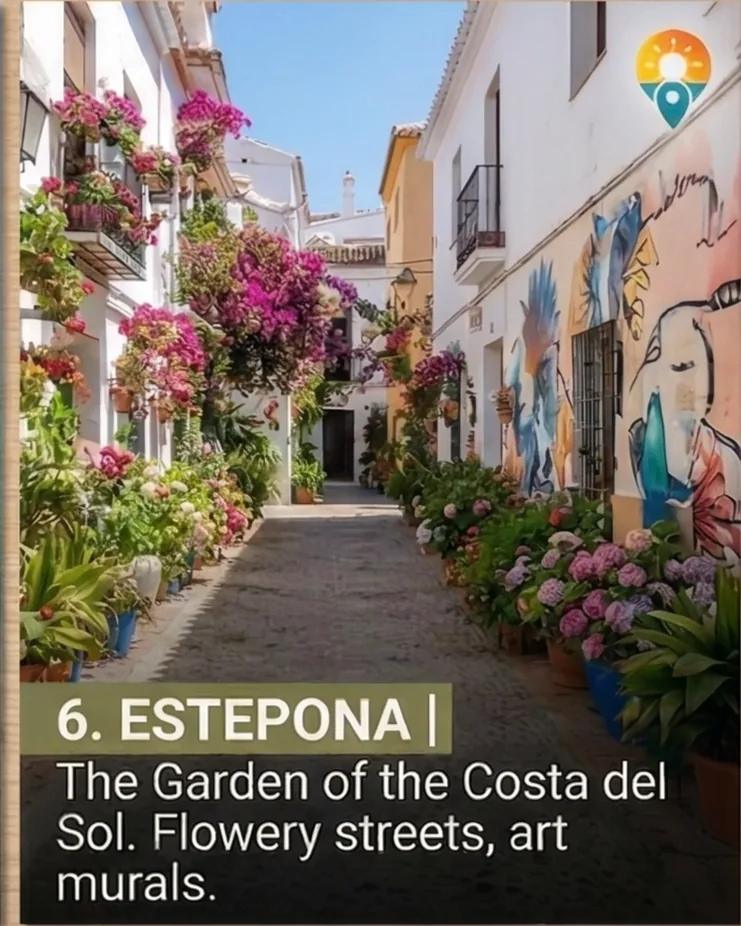
Estepona has quietly transformed its old town over the last decade into one of the most genuinely beautiful on the Costa del Sol — without the tourist prices of Marbella's. The narrow streets have been repaved, flower pots installed on every wall, and an ambitious street mural project has covered building sides across the casco antiguo with extraordinary painted artwork.
The result is a town that feels both authentically Andalusian and subtly curated. The Orchid House (Casa de las Orquídeas) in the main square is free and spectacular. The local covered market sells excellent fresh fish landed each morning at Estepona's own fishing port. And Playa del Cristo, a small sheltered cove just west of the harbour, is one of the finest beaches on the western Costa del Sol — still relatively unknown outside the local community.
4 El Palo, Málaga
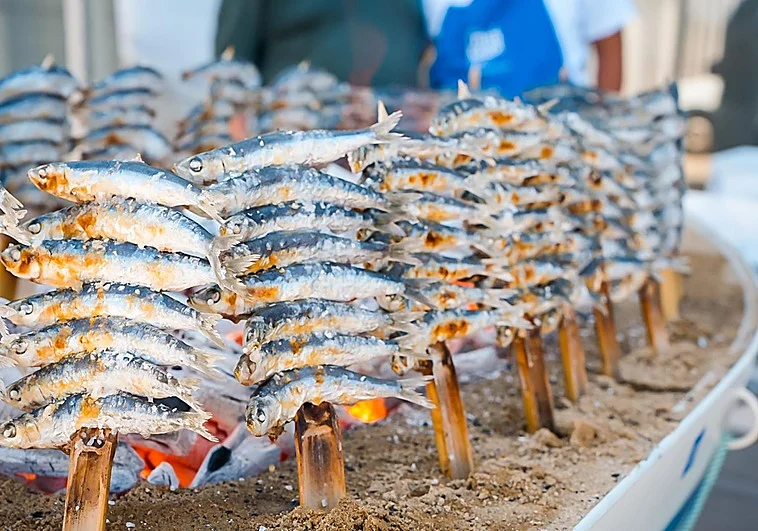
El Palo is the old fishing quarter of Málaga — a neighbourhood that package tourists never reach, yet where Malagueños come on weekends for the best espetos (sardines grilled on cane skewers over beach fires) in the province. The beach at El Palo is lined with small, family-run chiringuitos that have been in the same families for decades. The fish arrives from the boats each morning.
There's no tourist infrastructure here. No menus in English outside. The prices are roughly half what you'd pay near the Malagueta city beach, and the quality is higher. Arrive at 1:30pm on a Sunday, order espetos and cold local wine, and watch half of Málaga doing exactly the same thing around you. This is what eating on the Costa del Sol looked like before the package holiday industry arrived.
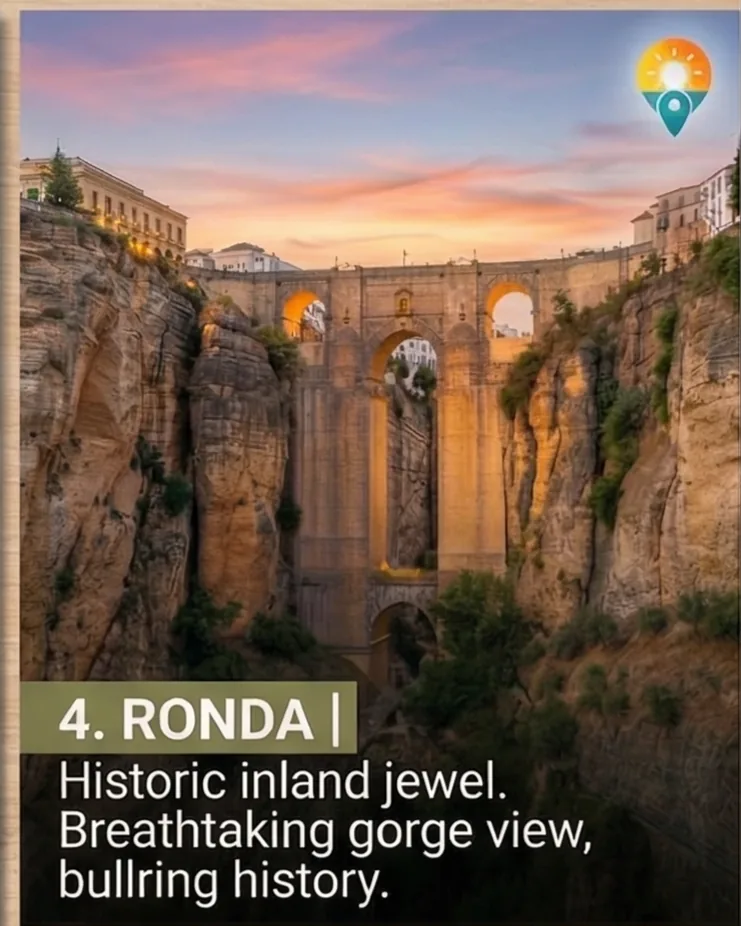
5 Comares
Comares sits at 739 metres on the summit of a conical hill in the Axarquía mountains, with the remains of a Moorish castle at its peak and 360° views across the hills to the sea. It looks, from a distance, like something dropped from the sky onto an impossibly narrow ridge. Up close, the village is a cluster of whitewashed houses connected by stone stairs and passages barely wide enough for one person.
The population is under 300 people. There are two bars and one restaurant. The tranquillity is absolute. Comares is the best example in the Axarquía of what the inland Costa del Sol has always looked like — before tourism, before infrastructure, before the coastal strip was built. The drive up through olive groves and almond orchards from the coast is beautiful in itself.

6 La Herradura
La Herradura (The Horseshoe) is a perfectly formed bay east of Nerja, named for its curved shape, flanked by dramatic rocky headlands that shelter the water and make it one of the calmest swimming spots on the coast. It's technically in Granada province rather than Málaga — which is part of why most Costa del Sol visitors never reach it.
The bay has a diving and snorkelling reputation that brings specialists from across Spain. The Punta de la Mona headland on the western end has underwater caves and exceptional marine life visibility. The town itself is small, relaxed, and entirely unaffected by mass tourism. The seafront restaurants serve excellent fresh fish at local prices. One of those places that regulars jealously guard.
7 Torrox Pueblo
Most people who visit this area go to Torrox Costa — the seafront resort strip with its large German-speaking expat community. Almost nobody goes 4km uphill to Torrox Pueblo, the original village perched on a hillside above the coast. It's a genuinely beautiful place: a typical Axarquía white village with narrow streets, a 16th-century church and sweeping views across the avocado and mango groves to the sea.
The area around Torrox has one of the mildest microclimates in Europe — the town bills itself as having the best climate in Europe — and the local agriculture is extraordinary: subtropical fruits (avocado, mango, papaya, cherimoya) grow on terraced hillsides. Visit the weekly market on Sunday mornings for fresh local produce sold by the farmers themselves.
8 Casares
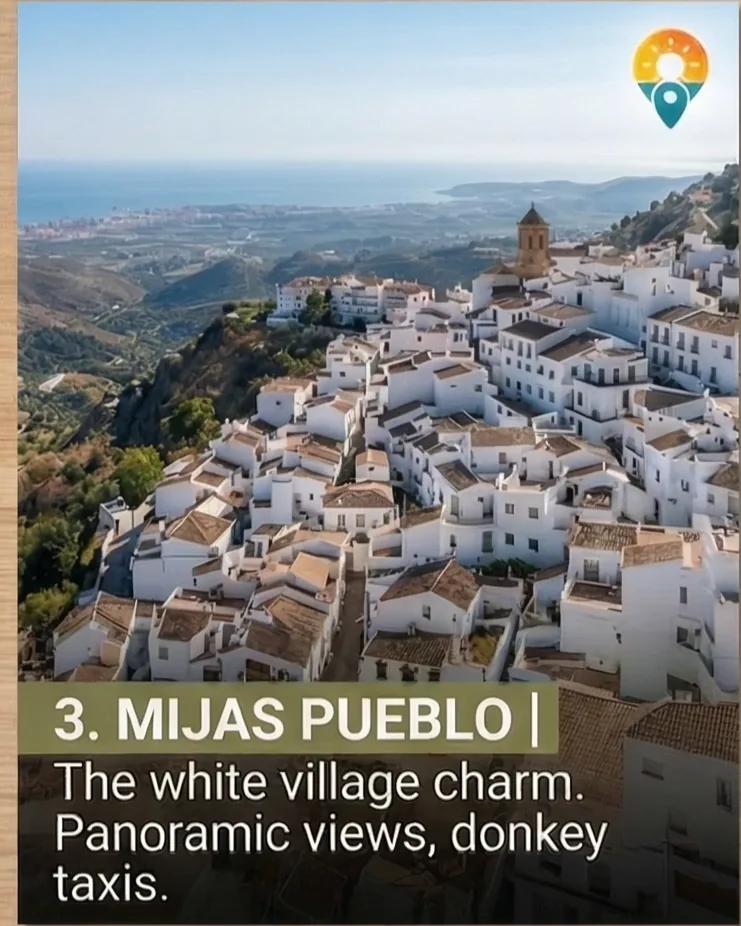
Casares is one of the most dramatically situated white villages in Andalucía — a cascade of white houses tumbling down a steep hillside beneath a Moorish castle, 15 minutes inland from the coast near Manilva. It's famous as the birthplace of Blas Infante, the "father of Andalusian nationalism," and has an extraordinary setting that most visitors to the western Costa del Sol drive straight past on the motorway below.
The drive up from the coastal road passes through a landscape of rolling hills, cork oak forest and natural hot springs (the Baños de la Hedionda, said to have been used by Julius Caesar to treat a skin condition). From the castle ruins at the top of Casares, the views extend over the hills to the Straits of Gibraltar and, on clear days, Morocco.

9 Río Chillar Walk, Nerja
The Río Chillar is a seasonal river that flows through a narrow limestone gorge out of the mountains above Nerja. In summer the water level drops and it becomes possible to walk upstream through the gorge itself — wading through knee-deep pools, squeezing through narrow rock passages, and emerging into cool canyon chambers carpeted in ferns and wild flowers.
The walk starts at the edge of Nerja town and takes 3–4 hours return (around 12km). No guide needed — just follow the riverbed upstream. Wear shoes you don't mind getting wet, bring a waterproof bag for your phone, and go on a weekday to avoid the weekend crowds. In July and August the canyon provides natural air conditioning when the coast is at 35°C above. Completely free, no permits required.
10 Benalmádena Pueblo
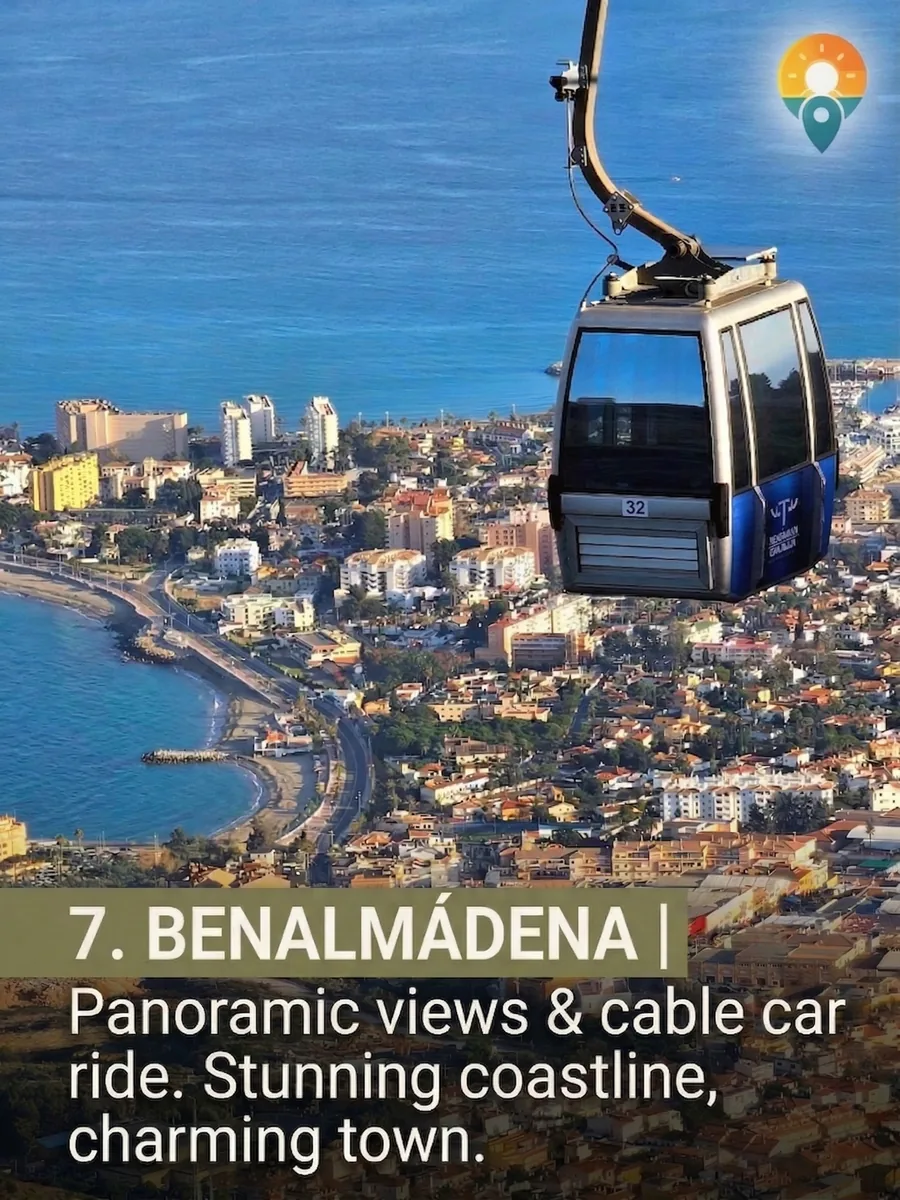
Everyone knows Benalmádena Costa — the resort strip, the cable car, the aquarium, the Puerto Marina. Almost nobody makes the 5-minute drive uphill to Benalmádena Pueblo, the original village that predates the resort development by centuries. Perched at 200 metres above the coast, the old village has a beautifully preserved historic centre, a 16th-century church, and an excellent Archaeological Museum with pre-Columbian collection that is quietly one of the best small museums on the Costa del Sol.
The terrace bars on the main square look straight down the hillside to the resort and sea far below. Lunch here costs roughly half what you'd pay at the marina restaurants. And in the late afternoon, the light on the white village walls against the blue sea backdrop is genuinely stunning.